
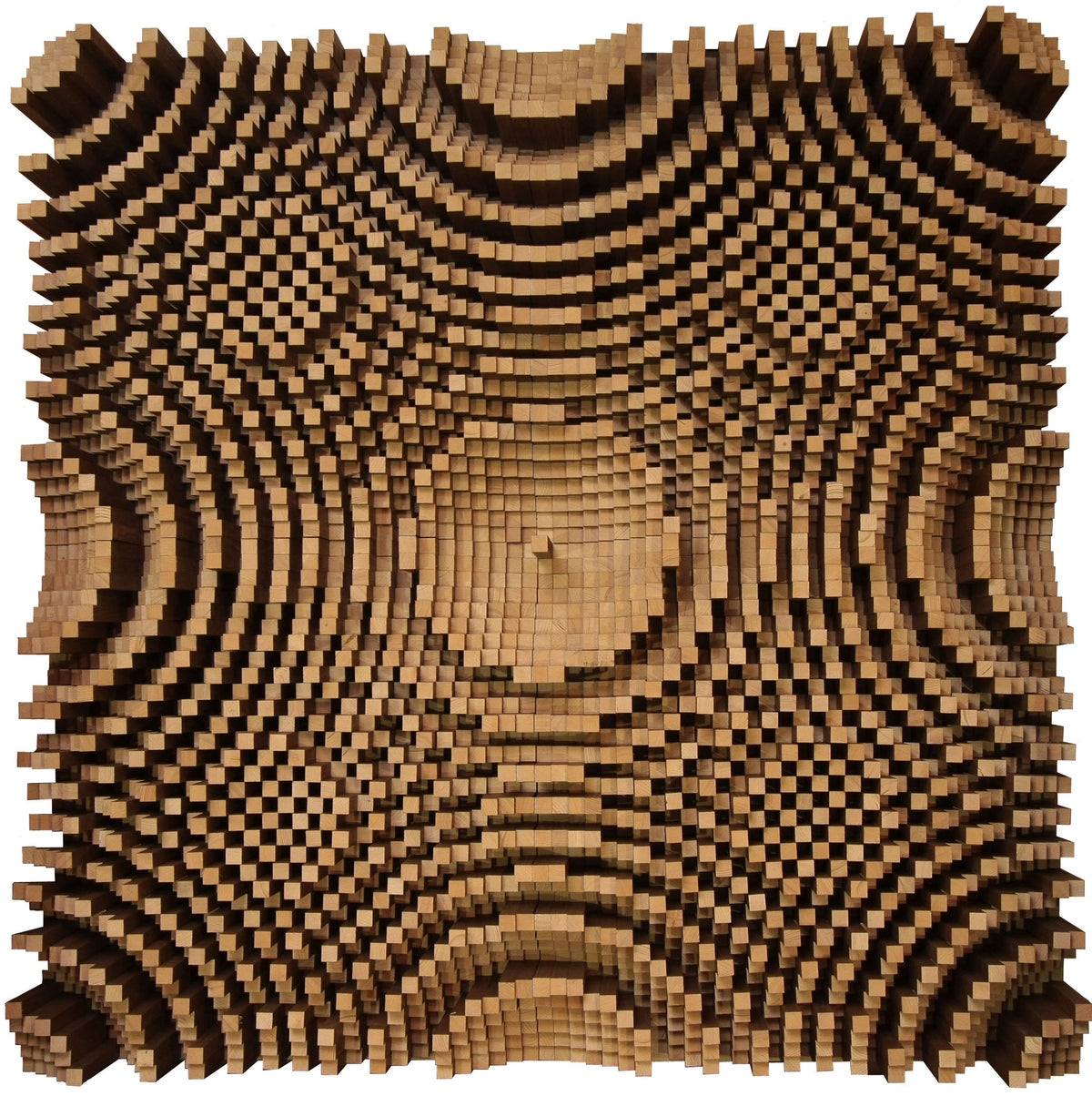
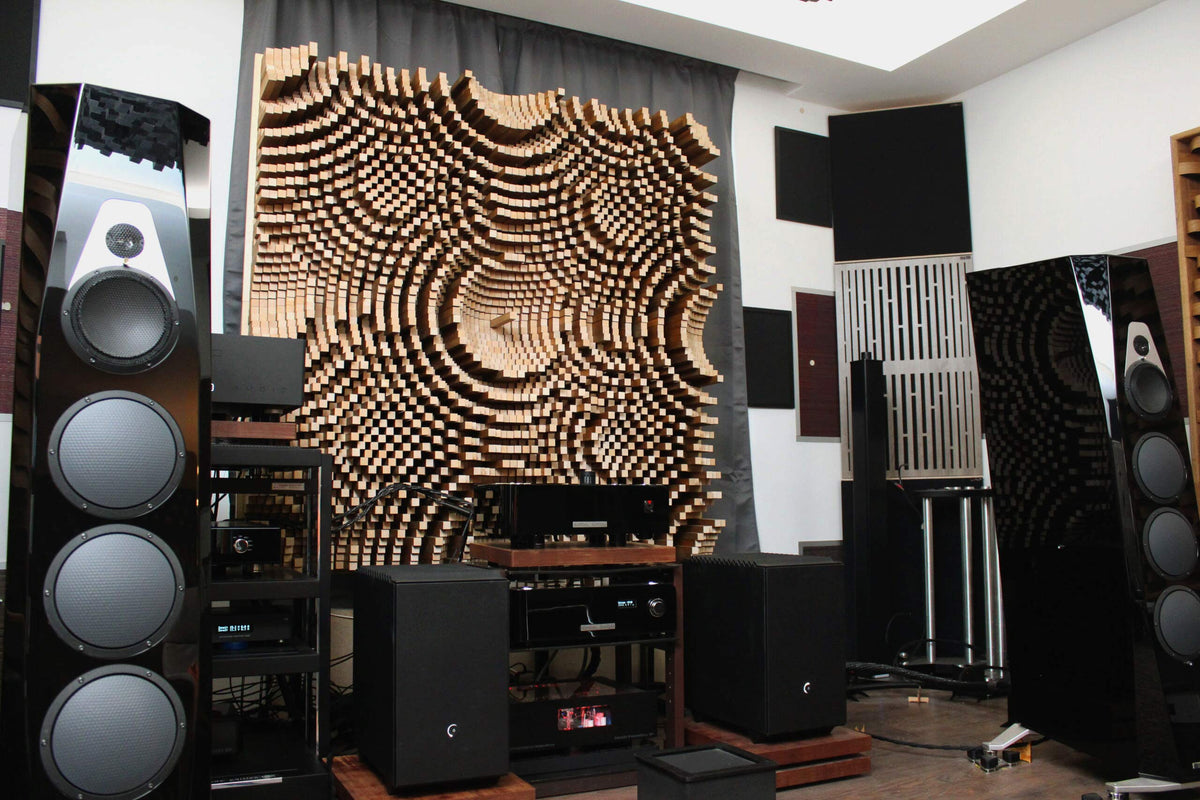
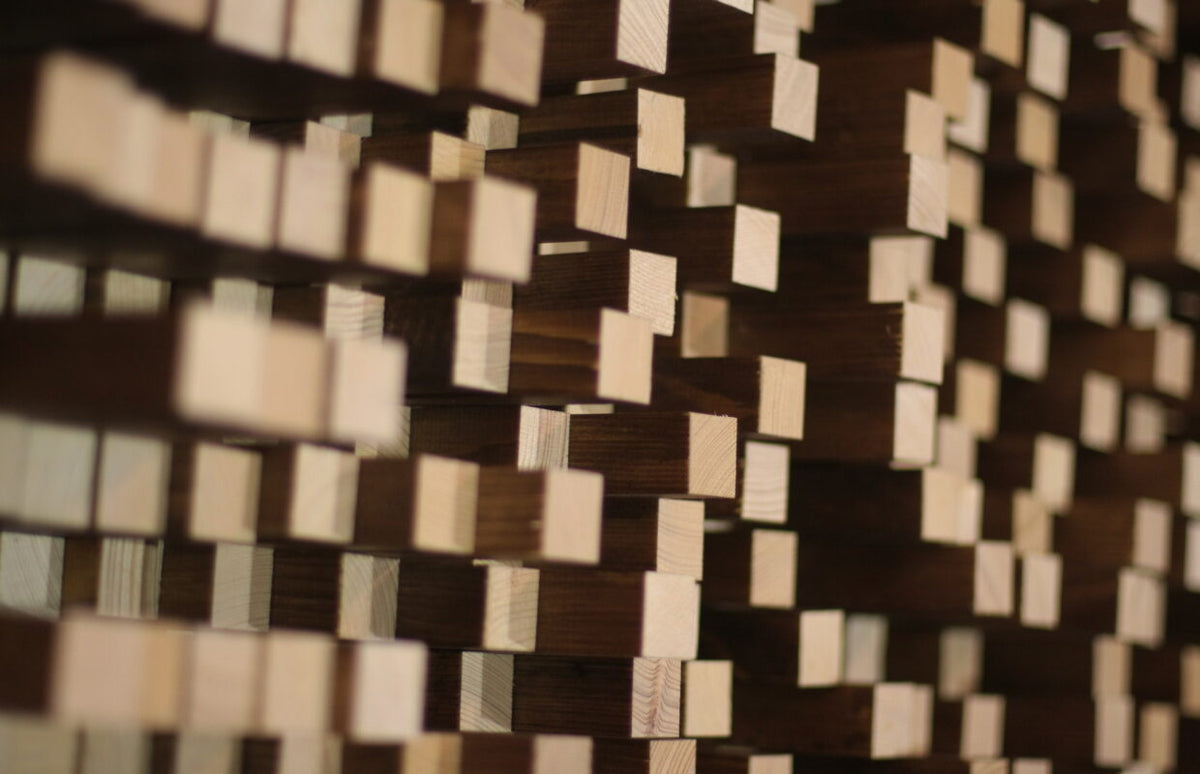
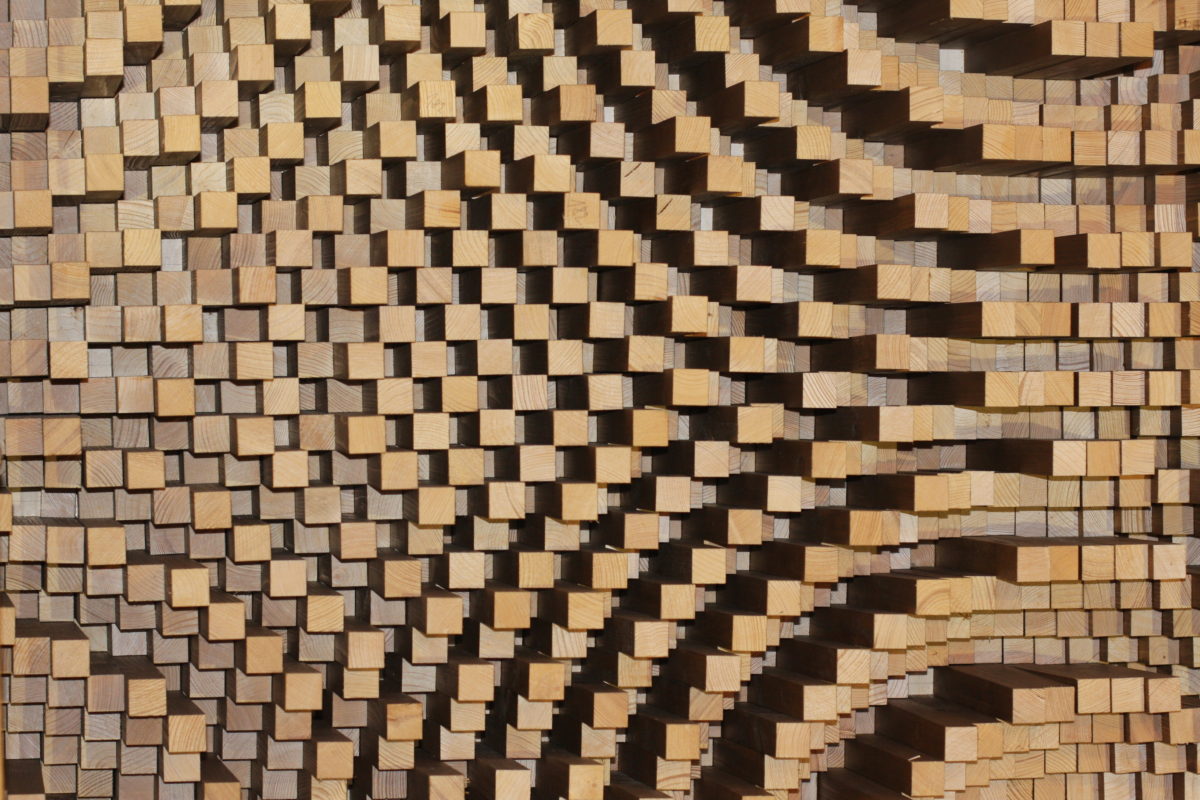
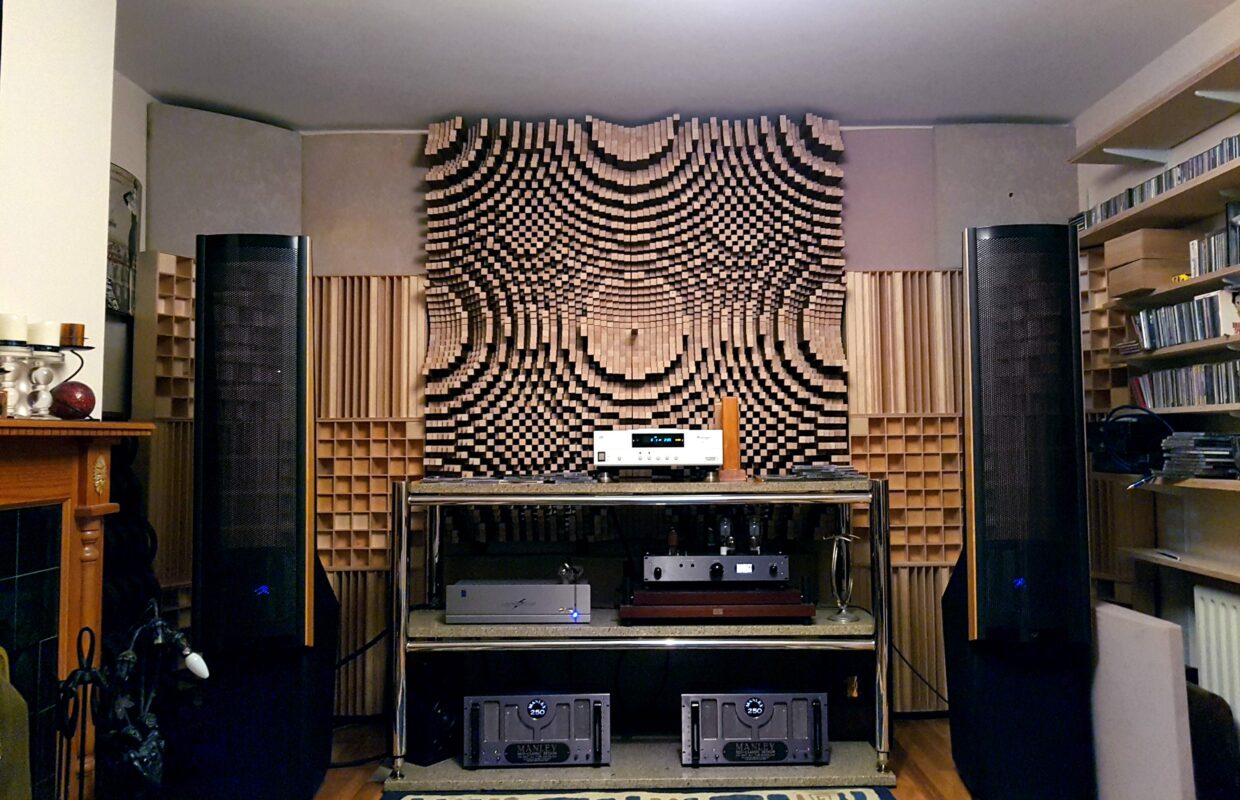
Acoustic diffuser prevents unwanted sound wave reflections in the listening space. Intended for demanding hifi listeners, it improves the overall acoustics of the listening space. Instead of absorbing the sound waves, as usual isolation does, they are evenly diffused.
The main advantage rests in filling the listening space with sound without unwanted linear reflections from flat surfaces. The diffuser should ideally be placed between the speakers in such a way that its centre point matches the centre point of the wall height.
Upon customer’s request, an inverse diffuser can be made. The inverse one is placed behind the listening spot so that the two are directly opposite each other. The effect of diffusing unwanted reflections then multiplies.
Specifics
The Milk Glass Effect
Using the acoustic diffuser has a similar diffusing effect on the sound as sandblasted milk glass does when placed in front of a light cone. Milk glass evenly disperses, or diffuses the light beams. The exact same effect of evenly and regularly dispersing sound is achievable with an acoustic diffuser.
Acoustic Diffuser – Theory, History
The formula for the calculation of the diffuser shape is based on quadratic differences of sequences from the elementary number theory, as described by mathematicians A. M. Legrand (1752–1833) and C. F. Gauss (1777–1857). The 2D-QRD quadratic diffuser has excellent efficiency, its behaviour can be calculated and it works in both horizontal and vertical planes.
Product Specifications
Type: Hybrid Diffuser Version A
Design: Circle pattern with greater absorption efficiency
Standard Panel Size: 1m × 1m
Front Absorptive Area: 1.161 m²
Front Reflective Area: 1.42 m²
Height: 103 cm
Width: 104 cm
Depth: 17 cm
Weight: 15 kg
Other Sizes Available: 2m × 1m, 3m × 2m
Custom Sizing: Available upon request
Choose options